
Stay informed on the devastating Tehran oil depot airstrikes changing the Middle East
The conflict between Israel and Iran reached a terrifying peak this week. Massive explosions rocked the Iranian capital early Sunday morning. These Tehran oil depot airstrikes have caused a massive environmental and humanitarian disaster. Residents of the city woke up expecting a normal sunrise. However, they found the sky completely covered in thick black smoke. The sun remained hidden behind a veil of burning fuel. This event marks a dark turning point in the ongoing regional war. Consequently, the global community is watching with great concern.
Tehran oil depot airstrikes and the blotting of the sun
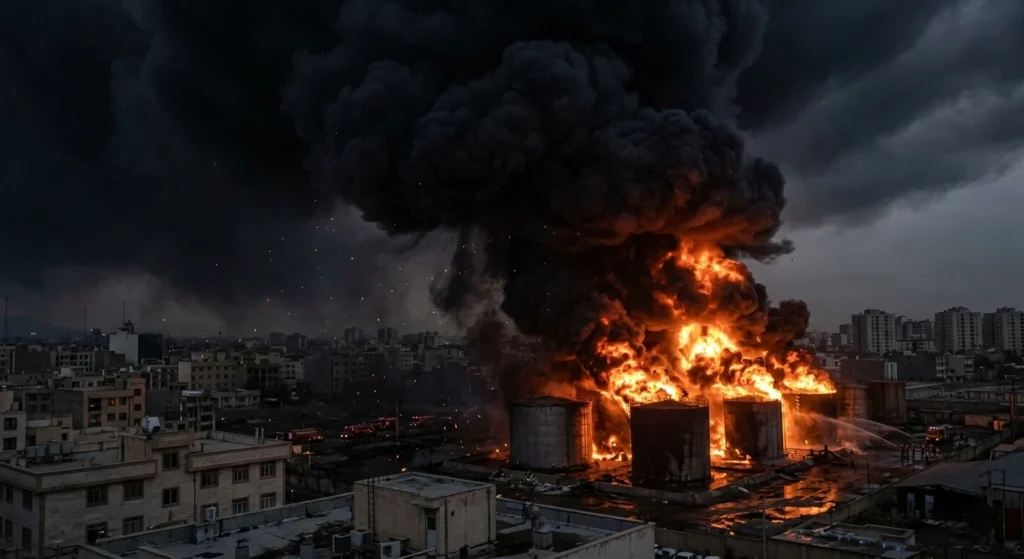
The visual impact of the strikes is truly apocalyptic. Huge plumes of soot and smoke rose thousands of feet into the air. Consequently, the smoke blocked out all natural light in the capital. Residents described a scene of total darkness at midday. Moreover, the air quality has plummeted to dangerous levels. Many people are struggling to breathe in the thick haze. The smoke smells of burning chemicals and crude oil. Therefore, health officials have warned everyone to stay indoors.
Specifically, five major fuel depots were targeted in the operation. These facilities are critical for the energy needs of the city. Furthermore, the fires are still raging out of control. Firefighters are working tirelessly to contain the massive inferno. However, the heat from the burning oil is too intense for close contact. Therefore, they must keep a safe distance while spraying water. The sky remains a deep shade of black across the entire region. This event shows the extreme scale of the modern aerial campaign.
Impact of the Tehran oil depot airstrikes on civilian safety
The human cost of these attacks is already becoming clear. Reports confirm that at least four people have died so far. Specifically, two tanker drivers were killed during the initial blasts. These workers were simply trying to complete their daily shifts. Additionally, dozens of others have suffered from smoke inhalation. Hospitals in Tehran are currently overwhelmed with new patients. Consequently, medical supplies are starting to run very low.
Families are fleeing the areas closest to the burning depots. They fear that more explosions could happen at any moment. Meanwhile, the sound of sirens fills the dark streets of the city. For more details on this topic read our earlier coverage here. The psychological impact on the residents is profound. Many have never seen such a massive fire in their lives. Therefore, the sense of panic is growing among the general public. Authorities are trying to maintain order despite the chaos. However, the lack of light makes every task much harder.
History of the Tehran oil depot airstrikes in the nine-day war
This latest strike is part of a larger military campaign. The war between Israel and Iran is now in its ninth day. It began with a series of high-profile strikes on February 28. During those initial attacks, the supreme leader Ali Khamenei was killed. This event triggered a massive escalation in the conflict. Since then, the military has targeted 174 different cities. Operation Epic Fury has focused on weakening the Iranian regime.
The Tehran oil depot airstrikes represent a shift in strategy. By hitting fuel supplies, the attackers hope to slow down the military. However, the Iranian forces are not backing down yet. They have vowed to retaliate with even more powerful weapons. Currently, Iran is using its first and second generation missiles. They claim to have more advanced long-range missiles in reserve. Consequently, the risk of a wider war is very high. Therefore, international leaders are calling for an immediate ceasefire. Meanwhile, the strikes continue to hit strategic infrastructure daily.
How the Tehran oil depot airstrikes affect world fuel prices
The global economy is feeling the shock of these events. Iran is a major player in the global energy market. Consequently, the destruction of its fuel depots has spooked investors. Oil prices have surged to record highs in the last 24 hours. Furthermore, the blockage of the sun in Tehran is a symbolic blow. It shows that no energy facility is safe from attack. Therefore, shipping companies are avoiding the region entirely.
Moreover, the Trump administration is closely monitoring the situation. They have shifted their tone toward Latin American oil partners. This shift aims to secure alternative energy sources for the West. Meanwhile, the loss of Iranian supply is causing a global shortage. Consequently, gas prices at the pump are rising for everyday people. The Tehran oil depot airstrikes have truly global consequences. Thus, even people far away are paying the price of war. Additionally, the environmental damage to the atmosphere is massive.
Environmental disaster and the local response
The burning oil has released millions of tons of carbon. This soot will likely linger in the atmosphere for weeks. Consequently, it could affect weather patterns across the Middle East. Some scientists fear that “black rain” will soon fall on the city. This happens when soot mixes with water droplets in the air. Therefore, the ground and water supplies could become poisoned.
Residents are using wet cloths to cover their faces. They are desperate to find clean air in the dark city. However, the smoke is so thick that it enters buildings easily. Many shops and schools have closed their doors indefinitely. Meanwhile, the Iranian government is struggling to provide relief. They are focusing their resources on the military front instead. Consequently, the common people must find ways to survive on their own. This environmental crisis adds another layer of suffering to the war.
The global political fallout
World leaders are divided on how to respond to the crisis. Some nations support the strikes as a necessary measure. They argue that the Iranian regime must be stopped. However, others see the Tehran oil depot airstrikes as a war crime. They point to the civilian deaths and the environmental damage. Consequently, the United Nations is holding an emergency session tonight.
Russia has reportedly shared intelligence with the Iranian side. This has further complicated the relationship with the United States. President Trump has played down these reports in recent statements. Furthermore, neighboring countries like Qatar and the UAE are on high alert. They have intercepted several drones and missiles near their borders. The war is no longer contained within just two countries. Therefore, the threat of a global conflict is very real.
Final thoughts on the unfolding crisis
The situation in Tehran remains extremely fluid and dangerous. The fires at the oil depots show no signs of stopping. Consequently, the darkness over the city will likely continue. Residents are bracing for more long nights of uncertainty. They hope for a diplomatic solution to end the fighting. However, the rhetoric from both sides remains very aggressive.
The world must now deal with the fallout of this war. The Tehran oil depot airstrikes have changed the landscape of the conflict. We will continue to provide updates as more news arrives. Please stay safe and follow all local advisories. The path to peace seems very long and difficult right now. However, the hope for a ceasefire remains the only way forward. For more official details, you can visit the NDTV World News website.