
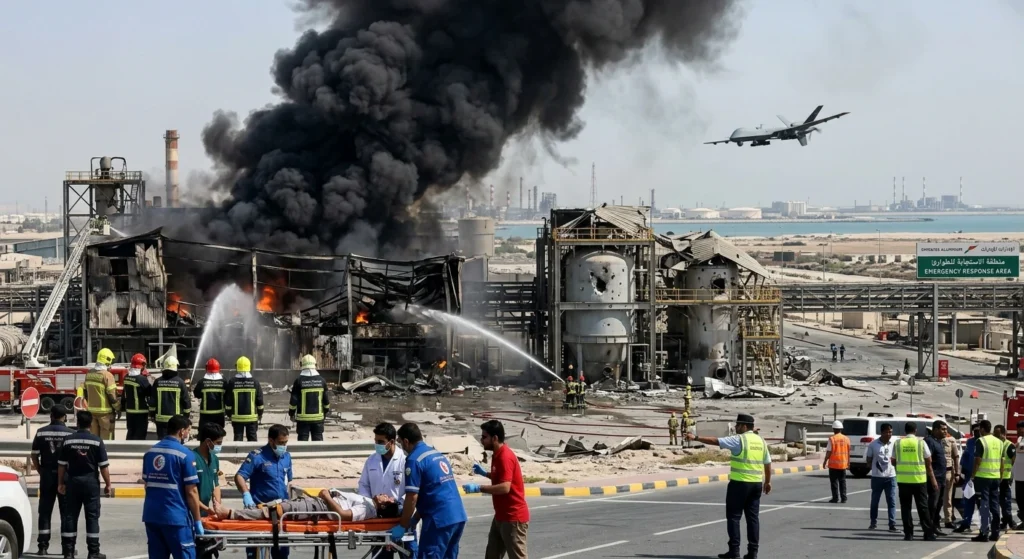
Stay updated on the escalating Gulf Conflict Crisis as regional stability hangs in the balance
The Middle East is facing a very dangerous moment right now. The war involving the US, Israel, and Iran has reached its fifth week. This weekend, the situation grew much worse for everyone in the region. Several Gulf nations reported a series of violent strikes. These attacks hit major industrial infrastructure sites. Consequently, global leaders are worried about a much larger war.
The violence is no longer limited to just a few areas. It is spreading across borders quickly. Many people are now injured. Important factories have stopped working. Furthermore, the global economy is feeling the pressure. This report looks at the latest events in this growing Gulf Conflict Crisis.
Major Industrial Damage in the Gulf Conflict Crisis
The United Arab Emirates (UAE) is reporting significant trouble today. An Iranian strike hit a key aluminium plant in Abu Dhabi. This facility is vital for the local economy. Emirates Global Aluminium operates the site. They reported significant damage to their equipment.
Additionally, the attack caused several injuries. Medical teams rushed to the scene to help the workers. This strike marks a major escalation in the Gulf Conflict Crisis. It shows that industrial hubs are now primary targets.
Meanwhile, Bahrain is also dealing with similar violence. The state-controlled company, Aluminium Bahrain, shared bad news. An Iranian attack wounded two of their employees. The strike targeted one of the largest aluminium smelting facilities on earth.
These plants are essential for global trade. They provide metal for cars, planes, and buildings. When these sites burn, the whole world feels the impact. The Gulf Conflict Crisis is now hitting the heart of regional industry.
Regional Security Fears Grow During Gulf Conflict Crisis
The Islamic Revolutionary Guard Corps (IRGC) took responsibility for these strikes. They used a mix of drones and missiles on Saturday. Iran says these moves are a direct response to recent events. Specifically, they blamed the US and Israel for attacking Iranian plants first.
The IRGC issued a statement through the Mehr news agency. They claimed the targeted aluminium sites help the American military. However, they provided no proof for this claim. This cycle of revenge is making the Gulf Conflict Crisis harder to stop.
Other countries are also finding themselves under fire. Oman is currently investigating what it calls “cowardly attacks.” A drone strike hit the southern port of Salalah. One foreign worker was injured during the blast. So far, no group has claimed they did it.
Kuwait is facing its own set of problems as well. Their defense ministry reported a massive drone swarm. About 15 drones attacked the international airport. The radar system at the airport suffered significant damage. This makes air travel very unsafe in the region.
The people living in these nations are very worried. Their way of life is now on the line. Because of this, Gulf leaders want a seat at the table. They insist on joining any future peace talks. They want to protect their citizens from the Gulf Conflict Crisis.
For more details on this topic read our earlier coverage here.
Global Energy Markets React to Gulf Conflict Crisis
The economic cost of this war is rising fast. Oil and gas prices have already spiked this week. This happened because Iran effectively shut the Strait of Hormuz. This narrow waterway is the most important shipping route for energy. It connects the Persian Gulf to the Gulf of Oman.
Most of the world’s oil passes through this point. Without it, energy supplies cannot reach global markets. Consequently, fuel costs for families everywhere will likely go up. The Gulf Conflict Crisis is no longer just a local issue.
Now, a new group has entered the fight. Yemen’s Houthi rebels joined the conflict on Saturday. Iran supports this group with weapons and money. The Houthis launched missiles at “sensitive” military sites in Israel.
Israel said its defense systems shot down two missiles. However, the threat remains very high. The Houthis promised to continue their attacks. This raises fears of more economic disruption. If they target ships in the Red Sea, trade will stop.
We saw this happen before during the Gaza war. The Houthis attacked ships to support Hamas. If they do it again now, prices will explode. The Gulf Conflict Crisis could trigger a global financial disaster. Everyone is watching the shipping lanes with great fear.
Humanitarian Losses Mount in the Gulf Conflict Crisis
While industries burn, people are also losing their lives. The fighting in Lebanon is getting much worse. On Saturday, an Israeli strike killed three journalists. One of them was Ali Shoeib. He worked for Al Manar TV.
The Israel Defense Forces (IDF) called him a “terrorist.” They claimed he belonged to the Radwan Force. They said he used his job as a cover. However, the IDF did not show any evidence for this. They also did not talk about the other two deaths. Their names were Fatima and Mohamed Ftouni.
The World Health Organization (WHO) shared a tragic report as well. Nine paramedics died in southern Lebanon in just 24 hours. This brings the total of killed health workers to 51 for March. These people were trying to save lives.
The Gulf Conflict Crisis is taking a heavy toll on civilians. Hospitals are struggling to keep up with the wounded. Doctors are working under constant threat of bombs. The humanitarian situation is becoming a nightmare for the region.
The Divided Path to Peace
Gulf nations are not united on how to fix this. Some want to stay close to the United States. Others think they must build a better relationship with Iran. This split makes it hard to find a solution.
However, all these countries agree on one thing. They cannot let the war destroy their economies. They want the violence to end before more plants explode. The Gulf Conflict Crisis has reached a tipping point.
The coming days will be very critical. Will the Houthis stop their missile strikes? Will the Strait of Hormuz open again? These questions matter to every person on the planet. For now, the region remains on high alert.
The world hopes for a ceasefire soon. But with industrial sites in ruins, trust is gone. The Gulf Conflict Crisis continues to reshape the Middle East in painful ways. We will continue to watch these events closely as they unfold.