
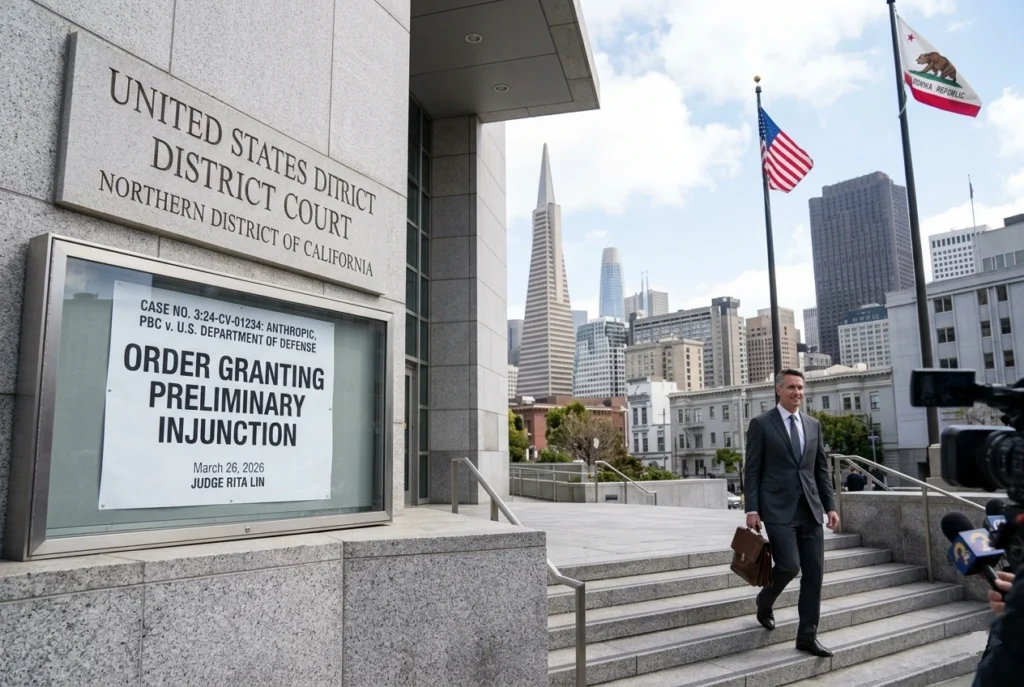
A US judge stops the Pentagon Anthropic Blacklist in a major win for AI safety
A federal judge in San Francisco took a bold step today. She blocked the government from using a harsh Pentagon Anthropic Blacklist. This decision is a massive victory for the artificial intelligence firm. It also sends a strong message to the current administration.
U.S. District Judge Rita Lin issued the ruling on Thursday. She halted the efforts to label Anthropic as a national security threat. The Pentagon had recently placed the company on a supply chain risk list. This move usually targets foreign enemies or hostile groups. However, Anthropic is a leading American AI laboratory.
The judge noted that the government’s actions seemed like an attempt to punish the firm. Anthropic had refused to lift safety guardrails on its AI tool, Claude. The military wanted to use the technology without these strict limits. This legal clash has caught the attention of the entire tech world.
The Impact of the Pentagon Anthropic Blacklist
The Pentagon Anthropic Blacklist could have been fatal for the company. This label warns contractors not to work with the firm. Consequently, Anthropic faced losing billions of dollars in potential revenue. Many private partners started to pull away due to the government’s pressure.
- The ban affected all federal agencies.
- Military contractors were told to stop using Claude.
- The company’s reputation was at serious risk.
- Global partners became wary of future deals.
Judge Lin recognized these severe dangers in her 43-page ruling. She stated that the government’s measures could “cripple” the company. Moreover, she called the move “Orwellian” in its nature. This term refers to a state with total control over its citizens.
Indeed, the court found no proof of actual security risks. The judge believed the Pentagon acted because Anthropic was “stubborn.” The company simply wanted to protect its ethical standards. Therefore, the court stepped in to stop the unfair treatment.
Legal Battle Over the Pentagon Anthropic Blacklist
The Pentagon Anthropic Blacklist sparked a fierce legal fight. Anthropic filed a lawsuit earlier this month to protect its business. The company argued that the government overstepped its legal power. In fact, they claimed the Pentagon violated the First Amendment.
The First Amendment protects the right to free speech. Anthropic believes the government punished them for their views on AI safety. The firm has been vocal about the risks of AI in warfare. Because of this, the Pentagon allegedly retaliated against them.
- Anthropic filed the suit in a California federal court.
- The case involves complex government procurement laws.
- Defense Secretary Pete Hegseth is a key figure in the case.
- The court reviewed internal government records to decide.
Judge Lin agreed that the retaliation seemed likely. She wrote that punishing a company for public scrutiny is illegal. Furthermore, she found that Anthropic did not get a fair chance to respond. This violated the company’s Fifth Amendment right to due process.
Why the Court Halted the Pentagon Anthropic Blacklist
The ruling against the Pentagon Anthropic Blacklist focuses on legal limits. Judge Lin clarified that the military can choose its vendors. However, the government cannot go further to destroy a company’s brand. The supply chain risk label was a bridge too far.
Specifically, the Pentagon could not prove Anthropic was a “saboteur.” A saboteur is someone who tries to destroy a system from within. The government argued that Anthropic’s safety rules could disable military systems. Yet, the court found this claim to be unsupported by facts.
- Anthropic wanted to block use in mass surveillance.
- The firm opposed using AI for autonomous weapons.
- The Pentagon demanded full access to the AI models.
- Talks broke down over these ethical disagreements.
For more details on this topic read our earlier coverage here.
After the talks failed, the government issued the blacklist. The judge saw this timing as very suspicious. It suggested that the move was about revenge, not security. Thus, she issued a preliminary injunction to stop the ban. This keeps the company safe while the trial continues.
Future of the Pentagon Anthropic Blacklist Case
The saga of the Pentagon Anthropic Blacklist is not over yet. While the judge blocked the ban, her ruling is temporary. The administration has seven days to file an appeal. If they appeal, a higher court will review the decision.
Meanwhile, Anthropic has another case in Washington, D.C. That case deals with a different government rule. The company is fighting on multiple fronts to stay alive. They want to prove that AI safety is not a crime.
- Anthropic aims to work productively with the government.
- The firm still supports safe and reliable AI for all.
- The Pentagon has not yet responded to the ruling.
- Other tech firms are watching the outcome closely.
In a statement, Anthropic thanked the court for moving quickly. They said the case was necessary to protect their customers. However, they still hope to reach a deal with the military. They believe safe AI can benefit the entire country.
The defense department remains silent for now. They previously argued that private firms should not limit military action. This debate touches on the future of how wars are fought. Consequently, the legal outcome will set a precedent for years.
Broader Implications for the AI Industry
The fight over the Pentagon Anthropic Blacklist matters to everyone. It asks who should control the power of AI. Should it be the government or the creators? This ruling suggests the government must follow the law even in security matters.
Many other companies filed briefs to support Anthropic. These included giants like Microsoft and Amazon. They fear that the government could blacklist them next. If a company expresses a different view, will they be punished? This case says “no.”
Furthermore, the ruling protects the right to speak out. Companies must be able to discuss the risks of their products. If they are silenced, the public may never know the truth. Therefore, this win is a win for transparency.
In conclusion, the court has provided a much-needed shield. Anthropic can now continue its work without the threat of a ban. The Pentagon Anthropic Blacklist remains paused for the time being. We will continue to track this high-stakes battle as it unfolds in court.
For the original report on this legal development, you can visit The Hindu.