
Why Iran still holds the master key to the stability of Global Energy Markets in 2026
As the conflict in the Middle East enters its third week, the world faces a harsh reality. Recent events prove that Tehran, not Washington, controls the global oil flow. This power shift has sent massive shockwaves through all Global Energy Markets. Despite claims of a quick win from the West, the situation remains very tense.
The current situation shows that military power is not enough to secure supply lines. Instead, political stability is the only way to ensure that energy continues to reach the global population. As long as the fighting lasts, the world remains in a state of high alert.
1. The Chokepoint Crisis in Global Energy Markets
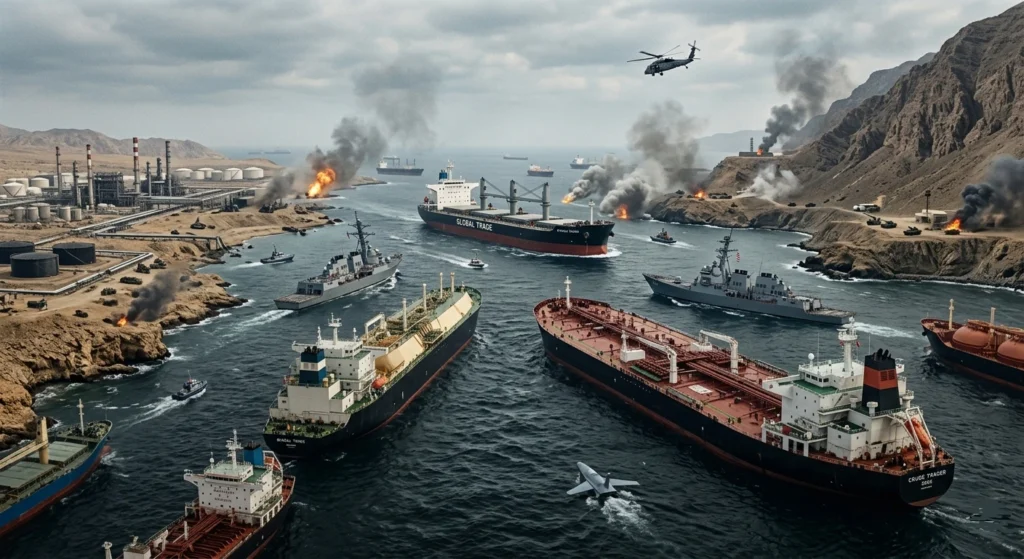
The Strait of Hormuz is now the most dangerous waterway on the entire planet. Iran has used low-cost drones and missiles to effectively shut down this vital passage. This area usually handles 20% of the world’s oil and liquefied natural gas (LNG). Because of this blockade, supply lines to many refineries have vanished almost overnight.
Experts warn that even if the fighting stops now, the damage is done. Shipping companies are afraid to return without strong guarantees from Tehran. Old safety promises from the United States are no longer enough for the Global Energy Markets. Iran can paralyze sea traffic with cheap tech, and that has changed everything. This has created a bottleneck that prevents any quick return to normalcy for the global economy.
2. Why Saudi Aramco Faces Such Massive Uncertainty
A recent letter from Saudi Aramco to its buyers has shown how deep this crisis goes. According to reports by Reuters, the state-owned company admitted it has no clear idea which ports it can use. Some buyers were told they might get oil from the Red Sea. Others were told to look toward the Gulf for their supplies. This confusion has left many nations wondering where their next shipment will come from.
One regular buyer said they might as well call Iran to find out when the war ends. This feeling shows a growing belief that Iran has the final say. The International Energy Agency (IEA) calls this the most severe supply shock in history. Without a clear path, the stability of Global Energy Markets remains a very distant dream. The lack of clarity from major producers only adds to the panic in the banking and energy sectors.
“I might as well call Iran to find out when this war ends so I can get my oil,” said one regular Saudi oil buyer upon receiving the letter.
For more details on this topic, read our earlier coverage here.
3. Rising Costs and High Volatility in Global Energy Markets
Oil prices have seen wild swings, recently hitting close to $120 a barrel. Iran has even warned that the world should prepare for $200 oil soon. These threats have caused refinery shutdowns across Saudi Arabia, the UAE, and Bahrain. This impacts not just the fuel at the pump but the cost of making almost every consumer product.
- Oil and gas prices have jumped by 60% in just two weeks.
- Production in Iraq has fallen by a staggering 70%.
- The UAE has been forced to cut its output by half.
- Total Middle East production is down by nearly 10 million barrels per day.
This massive reduction represents about 10% of total global demand. Such a big gap is impossible to fill quickly. This makes the recovery of Global Energy Markets a long and very painful process for everyone. Even if the U.S. uses its strategic reserves, the sheer volume of the loss is too great to ignore.
Why Military Power Alone Cannot Fix Global Energy Markets
President Donald Trump suggested sending military escorts to help restore shipping traffic. However, industry officials argue that naval escorts will not fix the real problem. Real change requires a political deal with Tehran to stop the attacks on ships. Without a truce, no amount of warships can guarantee that a single tanker will make it through the strait safely.
If the U.S. and Israel declare victory on terms Iran rejects, the trouble continues. Tehran is likely to use mines and drones to show it is not defeated. This message means that Washington does not control the rules of this conflict. The reach of the war now extends to the Red Sea as well. This makes it much harder for Global Energy Markets to find any sense of safety in the coming months.
The Collapse of Trust in Regional Supply Routes
The ongoing crisis has completely destroyed confidence in Middle Eastern supply routes. Repairs to damaged infrastructure will take many months to complete. Also, insurance for deliveries is becoming nearly impossible to find. The risk is simply too high for most commercial players to take. Without insurance, the cost of shipping becomes prohibitive for most companies.
Major global oil companies will be very slow to return to the Gulf. This delay risks causing permanent damage to oil fields that were shut down too fast. As long as drone threats stay, the Global Energy Markets will struggle to find balance. The world now knows that a win on paper does not mean oil starts flowing. Trust is easy to break but very hard to build back up.
The Future Outlook for Global Energy Markets
The IEA has released nearly 272 million barrels from strategic reserves to help. While this move aims to ease the pressure, it is only a temporary fix. It does not address the fact that production in the Middle East is currently at a standstill. The real solution lies in the diplomatic halls of Tehran, not just on the battlefield.
Until a real peace is reached, high prices will be the only constant. Investors are watching the U.S. Federal Reserve closely because of the inflation risk. High energy costs lead to higher costs for food and transport. The modern economy is very connected, so a fire in the Gulf burns everywhere. The world must wait for Iran to turn the key for Global Energy Markets to open again.
The global community must now look for alternative energy sources more seriously than ever. While solar and wind are growing, they cannot yet replace the massive volume of oil lost in this war. This ensures that the focus remains on the Middle East for the foreseeable future. We are entering a new era of energy security where political will is as important as natural resources.