
Affiliate Disclosure: As an Amazon Associate, we earn from qualifying purchases. This post contains affiliate links, which means we may receive a commission at no extra cost to you.
The Apple AI Strategy revealed: Why the world’s biggest tech giant stayed away from India’s largest summit
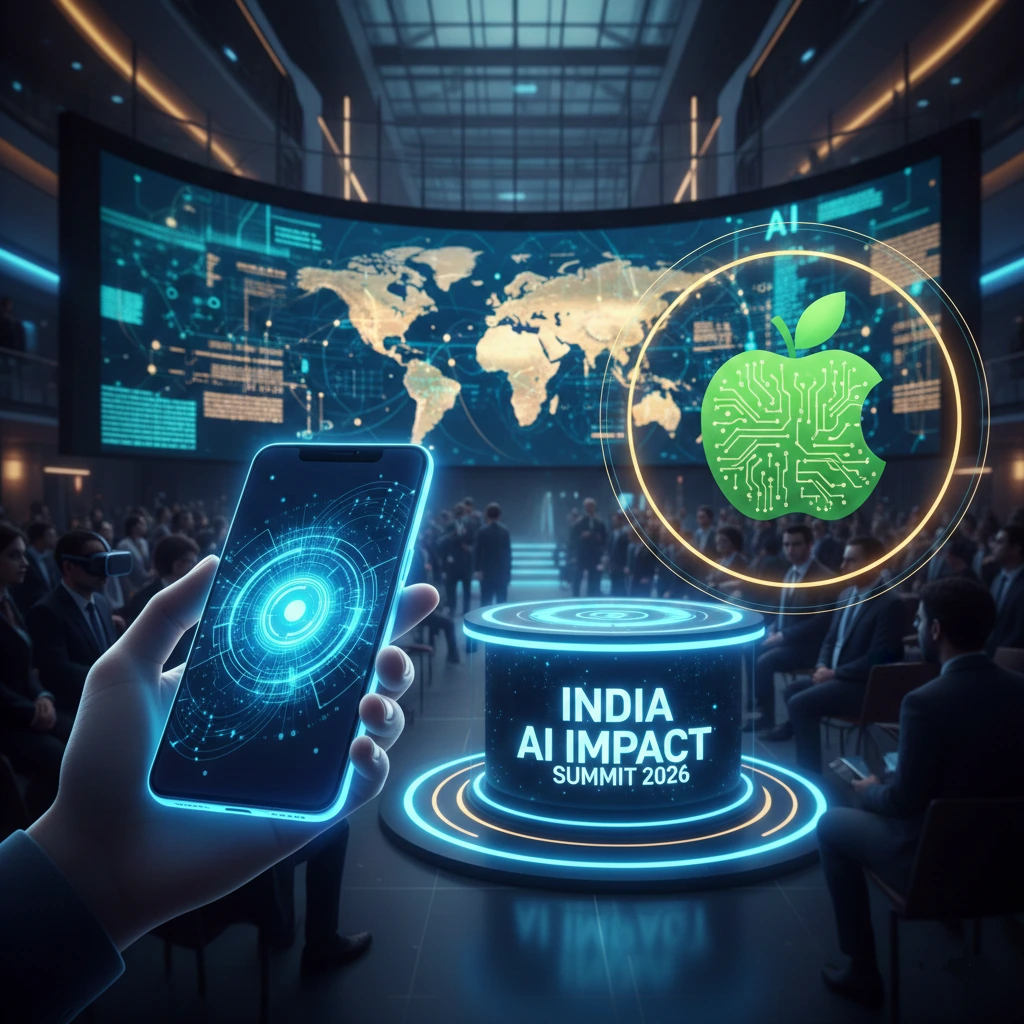
The world of technology recently gathered in New Delhi for a historic event. The India AI Impact Summit 2026 was a massive success. Thousands of experts and global leaders attended this five-day program. However, one major name was missing from the guest list. Apple did not attend the event at Bharat Mandapam. This absence has raised many questions about the Apple AI Strategy in India. While Google and Microsoft made big promises, Apple chose silence. In this article, we explore the deep reasons behind this move. We will look at how Apple plans to win the AI race differently.
The Mystery of the Apple AI Strategy
Most tech companies love the spotlight at global summits. They use these events to announce new models and massive investments. Yet, the Apple AI Strategy has always been more private. Apple rarely participates in industry-wide policy debates. They prefer to let their products do the talking. While others discuss infrastructure, Apple focuses on the user experience.
During the summit, the Indian government pushed for a “sovereign AI” ecosystem. They want companies to build local data centers. But Apple is a hardware company at its core. They do not want to manage massive cloud servers like Google. Instead, they want to put AI directly into your pocket. This is a fundamental shift in how they view the future of intelligence.
Why the Apple AI Strategy Avoids Summits
Summits often involve signing collective declarations and sharing data. The recent “Delhi Declaration” was signed by 88 countries. It focuses on democratizing AI resources. However, the Apple AI Strategy thrives on exclusivity and control. Apple does not like sharing its roadmaps with competitors.
- Apple prioritizes vertical integration over open collaboration.
- They avoid making public promises to government bodies.
- Their marketing relies on high-profile, solo launch events.
- The company focuses on finished products rather than research pilots.
- Privacy concerns make them cautious about cloud-based declarations.
By staying away, Apple avoids being grouped with “Big Tech” rivals. They want to be seen as a lifestyle brand, not a utility provider. This allows them to maintain a unique identity in the crowded AI market.
Comparing Apple AI Strategy with Google
The contrast between leaders was very clear at the summit. Google CEO Sundar Pichai spoke about the “AI for All” initiative. Microsoft announced a record $17.5 billion investment in Indian infrastructure. In contrast, the Apple AI Strategy is about “Apple Intelligence.”
Google wants its AI to be the brain of the entire internet. Apple wants its AI to be the helpful assistant inside your iPhone. Google trains massive models on public data. Apple uses smaller, highly efficient models that run on local chips. This difference defines their presence at public events. Google needs the summit to build partnerships. Apple already has a billion active devices to serve.
The Power of Local Distribution
Apple understands the Indian market very well. They are already manufacturing 14% of all iPhones in India. This is a huge part of their global supply chain. However, their Apple AI Strategy treats India as a consumer hub. They do not see it as a place for foundational AI research yet.
They are betting on the “distribution-first” model. This means they will use models from OpenAI or Google inside their devices. They act as a gateway for AI. They do not need to build the smartest model in the world. They just need to provide the best way for you to use it. This strategy reduces their risk and saves billions in research costs.
Privacy as a Competitive Advantage
Many speakers at the summit discussed data sharing. They want to create a “Global AI Impact Commons.” While this sounds good for the world, it scares Apple. The Apple AI Strategy is built on a “Privacy First” promise. If they share data, they break that promise.
- They process most AI tasks on the device.
- They use “Private Cloud Compute” for heavy tasks.
- Users have total control over what AI sees.
- They do not sell user data for training.
This focus on privacy makes them look like the “safe” choice. In an era of deepfakes and data leaks, this is very smart. They do not want to be part of a declaration that might force them to open their doors. They want to keep their “walled garden” as secure as possible.
Future Outlook for the Apple AI Strategy
Will Apple eventually join the conversation in India? The government is currently drafting strict AI laws. These laws might require companies to have local representation. Therefore, the Apple AI Strategy will have to adapt. They cannot ignore the world’s fastest-growing economy forever.
We expect Apple to increase its local AI team in Bengaluru. However, they will likely avoid public summits for a few more years. They prefer to meet with leaders like Prime Minister Narendra Modi in private. This gives them more leverage to negotiate specific terms. They want to be treated differently because their business model is different.
Lessons from the 2026 Summit
The India AI Impact Summit proved that India is an AI superpower. It brought $250 billion in investment commitments. It showed that the world is ready for a digital revolution. But it also showed that Apple is comfortable being the “lone wolf.”
The Apple AI Strategy is about patience. They watch their rivals make mistakes with early AI versions. Then, they refine the technology and release it as a “must-have” feature. This happened with the MP3 player and the smartwatch. It is happening again with Artificial Intelligence. They are not late; they are just waiting for the right moment.
How Users Benefit from This Path
For the average iPhone user in India, this strategy is good. You get AI that works seamlessly with your photos and messages. You do not have to worry about your private data being used to train a global bot. The Apple AI Strategy focuses on utility over hype.
- Faster response times with on-device AI.
- Better integration with local Indian languages.
- Enhanced security for banking and personal apps.
- A smoother interface that feels natural.
While other companies talk about the “future of humanity,” Apple talks about “your day.” This personal touch is why they remain the most valuable company. They are not building a god-like AI. They are building a better tool for you.
Conclusion
Apple’s absence from the summit was a calculated choice. It confirms that the Apple AI Strategy is moving in a unique direction. They are choosing distribution over infrastructure. They are choosing privacy over public declarations. And most importantly, they are choosing their own timeline.
India will continue to lead the global AI discourse. But Apple will likely remain a quiet observer from the sidelines. They will continue to sell millions of iPhones. Each of those phones will become a vessel for their version of AI. In the end, they might not need a summit to win the hearts of Indian users. They already have the devices in their hands.
You can read the full official details of the New Delhi Declaration on AI Impact here.
Editor’s Choice: Want to experience the Apple AI Strategy firsthand? The Apple iPhone 16 Pro Max is the only device designed from the ground up to keep your AI data 100% private. [Check Price on Amazon]