
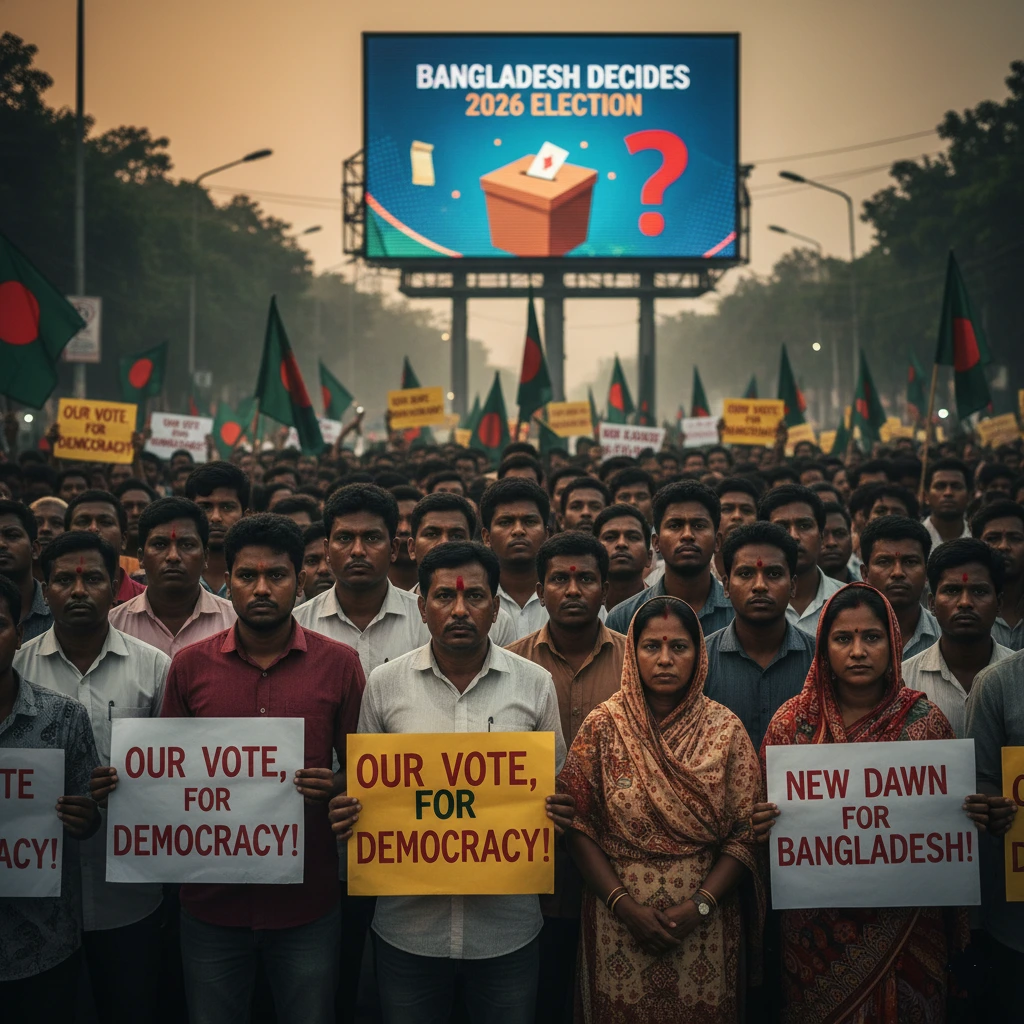
Tarique Rahman leads the BNP to a landslide victory as the focus keyword remains the future of democracy in Bangladesh
The political landscape of Bangladesh has shifted dramatically following the 13th national elections held on February 12, 2026. Under the leadership of Tarique Rahman, the Bangladesh Nationalist Party (BNP) achieved a massive win. This election marks a historic turning point for the nation. It comes after the student-led uprising in July 2024 toppled the previous regime. The results confirm a two-thirds majority for the BNP alliance, signaling a new dawn.
1. The Historic Return of Tarique Rahman
Tarique Rahman has emerged as the central figure in this new era. After spending 17 years in self-imposed exile in London, he returned to Dhaka in December 2025. His homecoming was met with intense emotional support from followers. He successfully contested and won two seats, Dhaka-17 and Bogra-6.
Rahman is now set to become the first male Prime Minister of Bangladesh since 1991. This victory is seen as a personal triumph for him. It also marks a significant comeback for the BNP after two decades. Many citizens believe his leadership will bring a new vision to the country. The party has already called for nationwide prayers to mark the transition.
2. BNP Secures a Landslide Majority
The election results show a clear mandate for the BNP. The party and its allies secured 212 seats out of the 300 available in the Jatiya Sangsad. This total is far above the 151 seats required for a simple majority. The victory reflects a deep desire for change among the general public.
The BNP victory is being hailed as a win for democracy. Party leaders emphasized that the people have spoken against authoritarianism. The massive seat count allows the BNP to form a stable government. This result ends the “winner-takes-all” system that previously dominated.
3. Demand for Sheikh Hasina Extradition
One of the most pressing issues for the new government is the status of Sheikh Hasina. The ousted Prime Minister is currently in exile in India. The BNP has renewed its strong push for Sheikh Hasina extradition. They want her to return to Dhaka to face trial for her actions.
Senior BNP leader Salahuddin Ahmed confirmed that the party supports this move. They have urged the Indian government to send her back. This issue remains a sensitive point in regional diplomacy. It will test the relationship between the new leadership and neighboring India. The International Crimes Tribunal has already issued a death sentence for her role in the 2024 crackdown.
4. Results of the National Referendum
Alongside the general elections, a national referendum was held. This vote focused on the July National Charter 2025. The charter proposes sweeping constitutional reforms to prevent future authoritarian rule. The Election Commission reported a voter turnout of over 60 percent.
The “yes” vote won with over 65% support. This endorsement means Bangladesh will now implement major institutional changes. These reforms aim to ensure good governance and social justice. One key reform includes a 10-year term limit for the Prime Minister.
5. The Decline of Other Parties
While the BNP celebrated, other political groups saw mixed results. The Jamaat-e-Islami and its allies secured around 77 seats. The party chief, Shafiqur Rahman, won his seat in Dhaka-15. However, newer parties failed to make a strong impact.
The National Citizen Party (NCP), representing the youth, won only a few seats. This suggests that voters preferred established opposition forces. The Awami League was completely missing from the ballot for the first time in thirty years. This shift indicates a total realignment of political power in the region.
6. International Recognition for Tarique Rahman
Global leaders were quick to acknowledge the election results. Indian Prime Minister Narendra Modi spoke with Tarique Rahman via phone. He congratulated him on the remarkable victory. Modi expressed support for fulfilling the aspirations of the Bangladeshi people.
Other regional leaders also sent their best wishes. The United States was among the first to congratulate the BNP on its “historic victory.” China and Malaysia also noted the smooth conduct of the polls. This international support is crucial for the new government’s legitimacy. It suggests that the region is ready to work with the BNP leadership.
7. Future Challenges and Extradition Trials
The road ahead for Tarique Rahman is filled with challenges. The demand for Sheikh Hasina extradition will require careful legal and diplomatic handling. The new government must also address the economic needs of the country. Implementing the constitutional reforms will be a primary task for the new Parliament.
The general public expects a move away from the “fascist rule” of the past. The victory of the BNP is seen as a chance for a fresh start. The party plans to create one million ICT jobs for the youth. Whether the new government can meet these high expectations remains to be seen. The eyes of the world are now on Dhaka as it transitions to the “Second Republic.”
8. Economic and Social Reforms Ahead
The BNP’s election manifesto, “Bangladesh Before All,” outlines ambitious goals. The party aims to build a trillion-dollar economy by 2034. It plans to transition from consumption to investment-driven growth. Social justice will be a core principle of the new administration.
To help poor families, the BNP has promised “Family Cards.” These will allow low-income households to buy essential goods at fair prices. They also plan to increase health spending to 5% of the GDP. These measures are designed to provide a “human dignity-based” social safety net.
9. Restoring the Rule of Law
A major part of the Tarique Rahman agenda is judicial independence. The government will establish an independent Judicial Appointments Commission. This will prevent the Prime Minister from hand-picking judges as in the past. The police will also be transformed into a “service” rather than a “force.”
The new government also plans to protect the freedom of the media. This is seen as essential for a healthy democracy. Accountability will be required at every level of the state. The “July Charter” serves as the foundation for these institutional changes.
10. Conclusion: A New Chapter
Bangladesh stands at a historic crossroads after the 2026 elections. The return of the BNP after twenty years signifies a deep shift in public sentiment. Tarique Rahman now carries the weight of a nation’s hopes for reform. The world will watch closely as he navigates the complex path to stable democracy.
To better understand the historical struggles for governance in the region, check out Democracy in Bangladesh by Md. Sirajul Chowdhury. It offers deep insights into the nation’s political journey and the roots of the current constitutional shifts.
Disclosure: This post contains affiliate links. If you click and make a purchase, we may earn a small commission at no extra cost to you.