
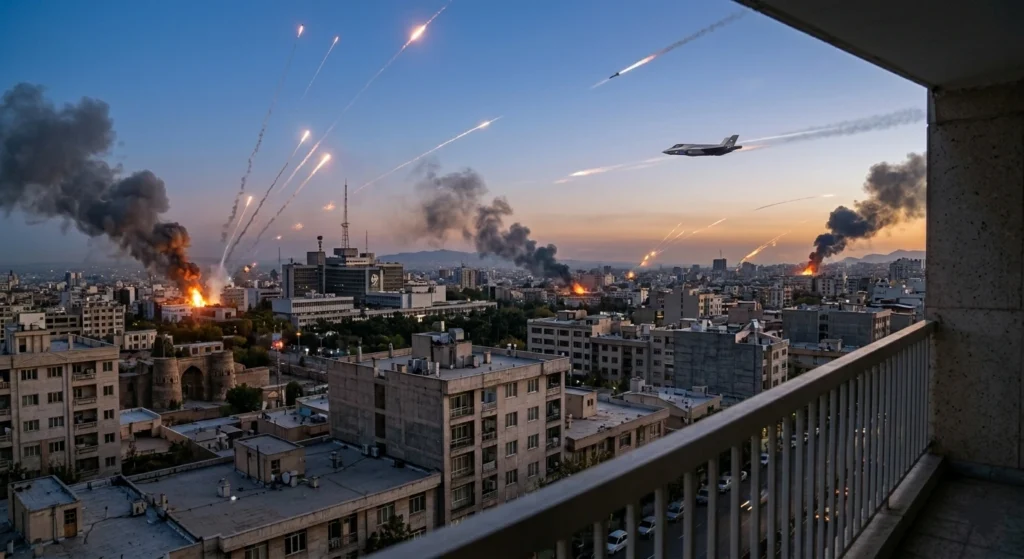
The Iran War enters a decisive phase as Netanyahu promises a rapid end to the regional conflict
Israeli Prime Minister Benjamin Netanyahu shared a bold vision for the ongoing conflict. He spoke during a high-profile interview on Fox News with Sean Hannity. Netanyahu addressed concerns about the length of the Iran War. He firmly rejected the idea that this fight would last for many years.
Instead, he predicted a quick and decisive result for the joint military operation. The Prime Minister stated that the current campaign is not an endless war. He admitted that the military action might take some time to finish. However, he insisted it will not drag on like previous regional conflicts.
Netanyahu views this conflict as a gateway to long-term peace. He believes the strikes are creating a path for a better Middle East. This perspective comes as the world watches the escalating violence with great concern. Many people fear a long and bloody struggle in the heart of the region.
Netanyahu’s comments aim to reassure both his citizens and his international allies. He wants to show that there is a clear plan for victory. Furthermore, he emphasized that the goals of the mission are very specific. These goals include the total removal of major security threats from Tehran.
Netanyahu Predicts Quick End to Iran War
The Israeli leader spoke as the conflict entered its fourth day. He dismissed comparisons to the long wars of the past. Netanyahu argued that the current situation is fundamentally different. He believes the Iranian regime is now at its weakest point in history. This weakness allows for a faster military resolution than many experts expect.
Moreover, Netanyahu praised the leadership of U.S. President Donald Trump. He described Trump as the strongest leader in the world today. He laughed off claims that Israel had dragged the U.S. into the Iran War. Instead, he said Trump does what he thinks is right for America. Netanyahu believes the two nations are working in perfect harmony.
The Prime Minister also spoke about the people of Iran. He said the war creates conditions for them to change their government. He described the current Iranian leadership as fanatical and unreformable. Therefore, he sees military action as the only way to ensure safety. He claims that the Iranian people deserve a chance to be free.
Consequently, the strategy focuses on hitting high-value targets. These targets include command centers and missile manufacturing plants. By focusing on these areas, Israel and the U.S. hope for a fast victory. They want to avoid a long occupation of Iranian territory. This approach is central to Netanyahu’s promise of a short conflict.
For more details on this topic, read our earlier coverage here.
Global Economic Shock Hits Amid the Iran War
While the military leaders speak of victory, the global economy is hurting. The Iran War has caused a massive surge in energy prices. Crude oil prices jumped by fifteen percent in just two days. Wholesale natural gas prices in Europe rose even faster. They spiked by a staggering forty percent since the fighting began.
This economic pressure is felt by families all around the world. Higher fuel costs lead to more expensive groceries and travel. Investors are also worried about the future of global trade. They fear that a prolonged Iran War could trigger a new wave of inflation. This uncertainty has caused global stock markets to slide downward.
Shipping through the Strait of Hormuz has essentially come to a halt. This narrow waterway is vital for the world’s oil trade. One-fifth of the globe’s oil passes through this specific area. Tehran has threatened to attack any ship that tries to pass through. As a result, supertanker costs have hit all-time highs this week.
In addition, the aviation industry is facing a massive crisis. Major flight hubs in the Gulf region remain closed. Dubai International Airport is the busiest airport in the world. It usually handles over one thousand flights every single day. Now, it has been shut for four consecutive days. Thousands of passengers are currently stranded in foreign cities.
Military Escalation Intensifies in the Iran War
The situation on the ground remains extremely volatile and dangerous. On Tuesday, explosions shook the buildings across the city of Tel Aviv. Air defense systems worked hard to intercept incoming Iranian missiles. Meanwhile, the Israeli Air Force targeted the state broadcaster in Tehran. They “struck and dismantled” the headquarters of the IRIB.
The military claimed the broadcaster was a tool for the Revolutionary Guard. They said it called for the destruction of Israel for years. Furthermore, the Iran War has expanded to the border of Lebanon. Israel is now attacking Hezbollah targets in several Lebanese towns. This expansion shows that the conflict is becoming a multi-front war.
On the other side, the IRGC has launched its own counter-attacks. They claimed to destroy a U.S. airbase command building in Bahrain. They used a wave of twenty drones and three missiles for this attack. The U.S. State Department has not yet commented on these specific claims. However, they confirmed that some American personnel have been killed.
In Riyadh, the U.S. Embassy was also a target of drone strikes. Two drones caused minor damage and a small fire at the compound. Saudi Arabia’s Defense Ministry said they intercepted eight more drones. These attacks show that no part of the region is truly safe. The violence is spreading far beyond the borders of Iran and Israel.
US Political Divisions Rise During the Iran War
Back in Washington, political leaders are debating the future of the Iran War. President Donald Trump initially said the war would last four to five weeks. However, he later suggested that the military timeline is actually open-ended. He told reporters that the U.S. has the capability to fight for longer. This shift in messaging has caused confusion among the public.
Secretary of State Marco Rubio offered a stern warning on Monday. He said the hardest hits from the U.S. military are yet to come. He also refused to rule out the use of ground forces. Rubio believes the mission can be achieved through air power alone. But he insisted that the President must keep all options on the table.
In contrast, some members of Congress are raising serious questions. Senator Mark Warner said there was no imminent threat to the U.S. soil. He believes the justification for the Iran War has changed too many times. He is demanding that the President present a clear exit plan. Other critics worry that Israel is deciding U.S. foreign policy.
Public opinion in the United States also seems to be divided. A recent poll found that only one in four Americans support the strikes. Many people are skeptical of another large military commitment overseas. They remember the long wars in Iraq and Afghanistan with regret. This skepticism creates a difficult political environment for the Trump administration.
- The conflict began with strikes that killed Supreme Leader Ali Khamenei.
- U.S. forces have struck more than 1,250 targets inside Iran so far.
- Six U.S. service members have died in retaliatory attacks this week.
- A “friendly fire” incident in Kuwait led to the loss of three jets.
- Global markets are reacting with fear to the rising cost of energy.
- Netanyahu insists the war will be “quick and decisive” for everyone.
Historical Context of the Nuclear Threat
The root of the Iran War lies in a long-running nuclear dispute. Israel has long opposed Iran’s uranium enrichment programs. They argue that Tehran is trying to build a nuclear bomb. Iran has always maintained that its program is for peaceful energy. However, Netanyahu claims he has proof of secret military work.
He mentioned that Iran started building new underground bunkers recently. These sites were designed to make their missile programs immune to attack. Netanyahu said that waiting any longer would have been too dangerous. He believes the joint strikes were a necessary preemptive move. He argued that action today prevents a nuclear disaster tomorrow.
This is not the first time the two nations have clashed. In June 2025, there was a short twelve-day war. During that time, many nuclear facilities were severely damaged. But Netanyahu claims that Iranian scientists resumed their work quickly. This persistence convinced him that the regime would never stop. He sees the current war as the final solution to this threat.
Consequently, the focus remains on destroying the infrastructure of war. This includes ballistic missile launch sites and research labs. The goal is to set back the Iranian military by many decades. Netanyahu believes this will bring safety to the entire world. He remains committed to this mission until the job is finished.
Regional Impact and Human Cost
The human cost of the Iran War is rising every single day. Hundreds of civilians have died in Iran, Israel, and Lebanon. In Tehran, residents have jammed the highways to flee the falling bombs. One resident described the city as being full of smoke and blood. Many families are hiding in basements to stay safe from the air raids.
Other nations in the region are also feeling the direct impact. India has called for an immediate de-escalation of the violence. Prime Minister Modi is in touch with other world leaders to seek peace. India is very concerned about the safety of its citizens in the Gulf. They also want to protect merchant ships from being attacked at sea.
In Kuwait, a tragic mistake led to the death of six U.S. crew members. Kuwaiti air defenses accidentally shot down three American fighter jets. This incident highlights the chaos of a high-intensity modern war. Even allies can make fatal errors when the tension is this high. It serves as a grim reminder of the risks involved in this campaign.
In conclusion, the world is at a very dangerous turning point. Netanyahu promises a swift victory and a path to lasting peace. However, the economic and human costs are already quite heavy. The next few weeks will decide the future of the Middle East. Everyone hopes that the Prime Minister’s prediction of a short war comes true.
You can track global energy prices on Bloomberg’s Market Data. This will show how the war affects your wallet.