
Disclosure: As an Amazon Associate, I earn from qualifying purchases. (paid link)
Accelerating financial power with the new India Banking Roadmap 2047
Finance Minister Nirmala Sitharaman presented the Union Budget 2026 today. She made a major announcement for the financial sector. The government will set up a high-level committee. This panel will create the India Banking Roadmap 2047. The main goal is to align banks with the vision of a developed India. This plan is part of the Viksit Bharat 2047 framework.
For those looking to dive deep into the technicalities of these changes, Taxmann’s Budget 2026-27 Guide offers a complete statutory and explanatory framework for the new tax and banking proposals. It aims to make Indian banks globally competitive. The announcement has created much excitement in the financial world. Many experts believe this is a bold step. It will help India become a top global economy.
What is the New India Banking Roadmap 2047?
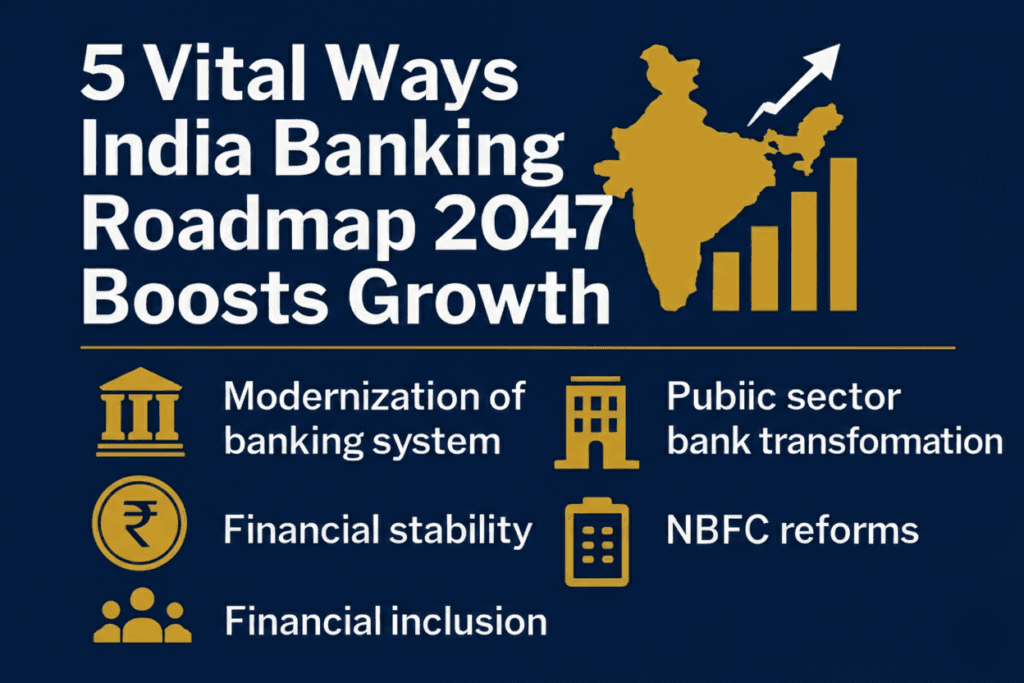
The India Banking Roadmap 2047 is a strategic plan. It aims to modernize the entire banking system. The Finance Minister proposed a high-level panel for this task. This panel will review the current structure of banks. It will also look at non-banking financial companies (NBFCs). The committee must ensure that the sector supports fast growth. At the same time, it must protect the interests of consumers.
The panel will focus on three main pillars. These are financial stability, inclusion, and consumer protection. India wants its banks to handle a much larger economy. Therefore, the roadmap will suggest deep structural reforms. It will also focus on adopting the latest technology. This will help banks serve the public more efficiently. Clearly, the India Banking Roadmap 2047 is a vision for a modern nation.
Why the India Banking Roadmap 2047 Matters Today
India’s banking sector is currently very strong. The Finance Minister highlighted this in her speech. She noted that banks have healthy balance sheets now. Moreover, they are reporting record-high profits. For instance, public sector banks earned over ₹93,000 crore recently. Their non-performing assets (NPAs) are also at a multi-year low. This is a huge turnaround from the past decade.
Consequently, this is the right time for the India Banking Roadmap 2047. The government wants to use this strength to build for the future. We no longer need to worry about bank survival. Instead, we can now focus on global leadership. The sector must grow to meet the needs of 1.4 billion people. Therefore, this roadmap is a necessary guide for long-term success.
The Future of PSBs in India Banking Roadmap 2047
Public sector banks (PSBs) are the backbone of our economy. Under the India Banking Roadmap 2047, they will undergo a transformation. The government wants at least two Indian banks in the global top 20. Currently, Indian banks are smaller than global giants. This must change by the year 2047.
The new panel will look at how PSBs can scale up. They need better governance and higher efficiency. Additionally, they must adopt new business models. This will help them compete with the best in the world. The roadmap will provide a clear path for this journey. It will also focus on making these banks more innovative.
NBFC Reforms within India Banking Roadmap 2047
Non-banking financial companies are also a priority. The India Banking Roadmap 2047 includes a vision for NBFCs. They play a vital role in providing credit to small businesses. The Finance Minister announced specific targets for them. These targets include credit disbursement and tech adoption.
Furthermore, the government will restructure key public sector NBFCs. This includes companies like the Power Finance Corporation. It also includes the Rural Electrification Corporation. This move will improve their operational efficiency. Specifically, it will help them provide more funds for infrastructure. This is a crucial part of the India Banking Roadmap 2047 strategy.
Strengthening Financial Inclusion for All
The roadmap also focuses on the common person. Financial inclusion has improved greatly in India. Over 25 crore people have escaped poverty in a decade. However, the work is not finished yet. The India Banking Roadmap 2047 aims for 100% coverage in every village.
Banks must reach every corner of the country. They must provide easy access to loans and savings. Technology will be the key to achieving this goal. For example, digital banking will reach the remotest areas. Therefore, the roadmap will push for more digital infrastructure. This ensures that no citizen is left behind.
Tech Adoption and Innovation in Banking
Technology is changing how we handle money. The India Banking Roadmap 2047 embraces this change. The panel will study how AI and data can help. These tools can improve risk management in banks. They can also make customer service faster and better.
Moreover, the roadmap will encourage the use of UPI and other digital tools. India is already a leader in digital payments. The government wants to maintain this lead. Therefore, the banking system must be ready for new challenges. This includes cybersecurity and data privacy. The India Banking Roadmap 2047 will address these issues head-on.
Consumer Protection and Regulatory Clarity
Protecting the consumer is a top priority. The high-level committee will review current laws. It wants to make rules more user-friendly. For instance, the Foreign Exchange Management Rules will be reviewed. This will help attract more foreign investment into India.
Additionally, the roadmap will focus on grievance redressal. Customers must feel safe when they use a bank. The rules must be clear and fair for everyone. Consequently, the India Banking Roadmap 2047 will build a more transparent system. This will boost the trust of the general public.
Boosting Credit for Key Growth Sectors
The roadmap also identifies specific sectors for growth. These include renewable energy and green infrastructure. Banks will be encouraged to lend more to these areas. This aligns with India’s climate goals. Moreover, sectors like food processing and tourism will get more support.
Data centers are another priority for the government. The India Banking Roadmap 2047 will provide a framework for this lending. It ensures that credit flows to the right places. This will create more jobs and boost the GDP. Indeed, the roadmap is a blueprint for national prosperity.
Experts React to the Budget 2026 Proposals
Many industry leaders have welcomed the new panel. They believe it shows a pragmatic approach. Arvind Kapil from Poonawalla Fincorp praised the focus on NBFCs. He said the budget understands India’s growth priorities. Other experts noted the importance of market reforms.
The corporate bond market will also be strengthened. This provides more funding options for businesses. Transitioning to a developed economy requires a mature bond market. Therefore, these reforms are highly praised by the financial community. They see the India Banking Roadmap 2047 as a game-changer. You can find more details on these developments at The Times of India.
Looking Ahead to Viksit Bharat 2047
The journey to 2047 is long and challenging. However, the government is setting a strong foundation. The India Banking Roadmap 2047 is just the beginning. It signals a move towards a more robust economy. We want to be the world’s third-largest economy soon.
A strong banking system is essential for this dream. It provides the capital needed for big projects. It also supports the small dreams of every citizen. Therefore, the roadmap is more than just a policy document. It is a promise of a better future for all.
Conclusion
The Budget 2026 has set a clear direction. The India Banking Roadmap 2047 will shape the next two decades. It focuses on growth, stability, and technology. The high-level panel has a big task ahead. However, the current health of the banking sector is a good sign.
We must continue to push for reforms. This will ensure that India stays on the path to becoming a developed nation. Every citizen will benefit from a stronger financial system. Clearly, the vision of Viksit Bharat 2047 is within our reach. Let us look forward to the transformation of Indian banking.