
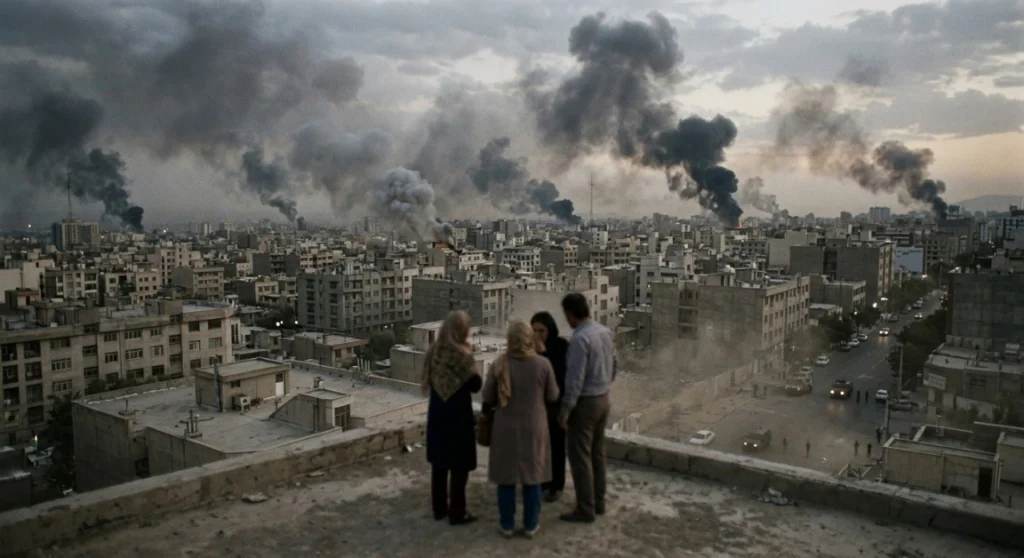
The Iran Conflict Crisis is reshaping the Middle East as civilian casualties rise and a historic regime faces an uncertain future
The Iran Conflict Crisis has reached a critical and dangerous point. On 28 February, heavy air strikes began across the country. The United States and Israel are targeting military sites. They also focus on political locations in Iran. These powers aim to weaken the current Islamic regime. However, the cost to human life is growing rapidly. Each day brings more reports of destruction. Families are living in constant fear of the next explosion. The capital city of Tehran is the primary target. Residents describe the current situation as unbelievable and horrific.
Humanitarian Toll of the Iran Conflict Crisis
The human cost of this war is truly staggering. More than 1,100 Iranian civilians have died so far. These numbers come from the Human Rights Activists News Agency. Specifically, one tragic event occurred in the city of Minab. On Saturday, an air strike hit a local girls’ school. Iranian officials reported that over 160 people were killed there. Many of the victims were young children. This event has caused deep sorrow across the region. The White House states it is investigating the school hit. They maintain that the US does not target civilians. Nevertheless, the loss of life remains a grim reality.
Additionally, hospitals are struggling to keep up with the wounded. Medical supplies are becoming very scarce in many cities. Families are desperately searching for missing loved ones in the rubble. Every hour, the death toll seems to climb higher. This Iran Conflict Crisis is far worse than previous wars. Locals say it surpasses the 12-day conflict from last year. The level of violence is truly without any modern precedent.
For more details on this topic read our earlier coverage here.
Life Under Siege During the Iran Conflict Crisis
In Tehran, the atmosphere is heavy with smoke and fear. A resident named Salar shared his terrifying personal experience. He said the number of explosions is simply unbelievable. Recently, a massive strike made his entire house shake. He now keeps his windows open at all times. This prevents the glass from shattering during loud blasts. Many people in the Shariati neighbourhood face similar daily dangers. This area contains many military facilities under active fire.
Consequently, Salar decided to send his elderly parents away. He sent them north to find a safer place. His mother is in very bad health from fear. She says these strikes are worse than the 1980s war. Many residents are fleeing the capital every single day. However, leaving is not an option for everyone in Tehran. Some have sick relatives who cannot be moved. They must stay and endure the terrifying sounds of war.
Furthermore, the city now feels strangely empty and quiet. People only leave their homes for very urgent reasons. Most shops have closed their doors to the public. Bakeries and supermarkets are the only places still open. Long queues for bread and petrol have become common. People wait for hours just to get basic supplies. The price of eggs and potatoes has skyrocketed recently. This economic pressure adds to the misery of the citizens.
Iran Conflict Crisis: Communication and Security Fears
The regime has increased its security presence significantly. Checkpoints are now visible on almost every street corner. A student in Tehran described the police as very nervous. He claimed the security forces are “scared of their shadows.” This suggests a high level of tension within the government. Furthermore, the authorities are using SMS messages to warn people. These messages threaten anyone who goes outside to protest.
Specifically, the regime labels protesters as “Israeli collaborators.” This label carries a very heavy and deadly risk. Many fear that protesters will be dealt with forcefully. Some believe the security forces might even kill them. Despite these threats, some people still feel a sense of hope. They are waiting for a final moment of victory. They believe the regime is weak after recent major losses.
Meanwhile, the Iran Conflict Crisis is causing massive internet blackouts. The government frequently cuts off the connection to the world. This makes it hard for people to contact family. Many Iranians are now using VPNs to access news. However, keeping a stable connection is a difficult task. Salar says his connection was down for two full days. During that time, he felt completely isolated from everyone.
The Iran Conflict Crisis and the Loss of Leadership
A major turning point was the death of the leader. The first wave of strikes killed Ayatollah Ali Khamenei. This news shocked the entire nation and the world. Some Iranians took to the streets to celebrate his death. Others joined public mourning events led by the authorities. The reaction of the public is very mixed and complex.
A resident named Kaveh found the news hard to believe. He felt angry rather than happy when he heard it. He felt his entire life had been destroyed by the regime. Yet, the leader was gone in just one single moment. This realization brought a sense of deep and heavy sadness. Kaveh lives in Zanjan, which is north-west of Tehran. He says fighter jets fly over his house constantly. The sky is always cloudy from the smoke of strikes. He describes the sight as both beautiful and horrifying.
Moreover, the international community is watching these events closely. News organizations often cannot get visas to enter the country. This limits the amount of reliable information reaching the world. Most of what we know comes from brave local residents. They risk their lives to share their stories with others. You can read more about global reactions on the BBC News website.
Iran Conflict Crisis: Regional Impact and Future
The war is now spreading beyond the borders of Iran. The United Arab Emirates (UAE) is also involved now. Their air defences are responding to Iranian missile threats. Recently, they intercepted six missiles and 131 drones. One missile and six drones landed on UAE territory. This shows the conflict is becoming a regional disaster.
Additionally, iconic structures in Iran are being completely destroyed. The Azadi indoor stadium in Tehran is now in ruins. State media showed footage of collapsed stands and smoke. This stadium could hold around 12,000 people at once. Israel claims the area was used by the regime’s forces. This destruction highlights the heavy cost of the ongoing war.
The Uncertain Path of the Iran Conflict Crisis
No one knows when this brutal war will finally end. Salar believes that no one will ever be the same. The stress levels in the country are incredibly high. He worries that people living abroad do not understand. They do not see the daily struggle for simple survival.
Nevertheless, some people like Kaveh still hold onto hope. He believes the war will not end very quickly. Yet, his hope for a better future grows every day. He thinks that without this operation, something worse happened. He sees a small chance for a better tomorrow now. The people of Iran are waiting for the smoke to clear. They want to live in peace and without any fear.
The Iran Conflict Crisis remains a fluid and evolving situation. Every day brings new challenges for the civilian population. Security forces remain on high alert across the entire country. Meanwhile, the international community calls for an end to violence. The world hopes for a resolution that protects human life. Until then, the people of Iran continue to endure. They face a future that is both uncertain and dangerous.