
Affiliate Disclosure: As an Amazon Associate, we earn from qualifying purchases. This post contains affiliate links, which means we may receive a commission at no extra cost to you.
The Artemis II moon mission launch is a historic step forward that will carry humanity further into deep space than ever before
NASA is officially ready to make history once again. The space agency has confirmed a new target date for the Artemis II moon mission. This flight will send four astronauts around the Moon for the first time since 1972. It represents a giant leap in the modern race to explore deep space.
Engineers recently finished a critical fueling test at the Kennedy Space Center. The test proved that the massive Space Launch System rocket is stable. Consequently, officials now feel confident about the upcoming launch. This mission is not just a test flight. It is a bold statement about human potential and future lunar living.
The world is watching as the countdown draws closer. This article will explore every detail of this historic journey. We will look at the crew and the technology. Furthermore, we will explain why this mission matters for all of humanity.
The Official Date for the Artemis II Moon Mission
NASA officials held a press conference to share the big news. They have targeted March 6, 2026, for the launch. This date comes after several months of technical delays and heat shield concerns. However, safety remains the top priority for the agency.
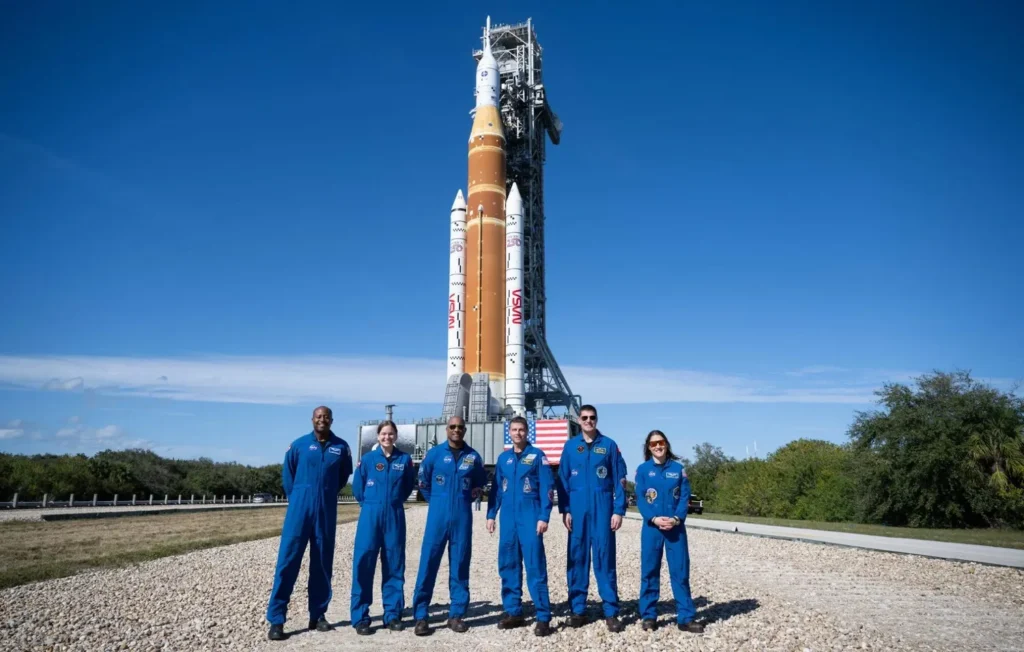
The launch will take place at the iconic Launch Complex 39B. This is the same site used for the legendary Apollo missions. The Artemis II moon mission will use the most powerful rocket ever built. This rocket will propel the Orion spacecraft into a high Earth orbit first.
After checking all systems, the crew will head toward the Moon. This trip will last approximately ten days. During this time, the astronauts will test all life-support systems. They must ensure that the spacecraft can handle the harsh environment of deep space.
- The launch is set for March 6, 2026.
- It will be the first crewed flight of the Artemis program.
- The mission duration is expected to be ten days.
- Success here paves the way for a lunar landing next year.
Meeting the Crew of the Artemis II Moon Mission
The crew of this mission is diverse and highly skilled. It includes three Americans and one Canadian astronaut. Commander Reid Wiseman will lead the group during the flight. He is joined by Pilot Victor Glover and Mission Specialist Christina Koch.
The fourth member is Jeremy Hansen from the Canadian Space Agency. Together, they represent a global partnership in space exploration. These individuals have trained for years for this specific moment. They have practiced every possible emergency scenario in high-tech simulators.
The Artemis II moon mission astronauts will travel 230,000 miles away from Earth. They will see the far side of the Moon with their own eyes. This perspective is something only a handful of humans have ever experienced. Their courage inspires a new generation of scientists and dreamers.
- Reid Wiseman is the mission commander.
- Victor Glover will serve as the pilot.
- Christina Koch and Jeremy Hansen are mission specialists.
- This is the first time a woman and a person of color will head to the Moon.
Technical Goals of the Artemis II Moon Mission
This flight is primarily a test of the Orion spacecraft. NASA needs to know if the ship can keep humans alive far from Earth. One major focus is the communications system. The crew must stay in contact with Mission Control at all times.
Another critical goal is testing the manual flight controls. The astronauts will practice proximity operations near the rocket stage. This ensures they can steer the ship if automated systems fail. The Artemis II moon mission will also measure radiation levels inside the cabin.
Radiation is a significant threat to long-term space travel. By gathering this data, NASA can design better shields for future trips. The mission will end with a high-speed reentry into Earth’s atmosphere. The Orion capsule will splash down in the Pacific Ocean under massive parachutes.
- Testing life-support systems in deep space.
- Verifying manual steering and docking capabilities.
- Measuring deep-space radiation effects on the crew.
- Performing a successful high-speed reentry and splashdown.
You can find the official technical updates and mission timelines on the official NASA Artemis II mission page.
Overcoming Challenges for the Artemis II Moon Mission
The path to this launch has not been easy. NASA faced several setbacks during the development phase. The most significant issue involved the Orion heat shield. During the uncrewed Artemis I flight, the shield wore away more than expected.
Engineers spent over a year analyzing the data. They had to ensure the shield could protect the human crew during reentry. Heat during reentry can reach 5,000 degrees Fahrenheit. Because of these safety checks, the Artemis II moon mission was delayed from its original 2024 date.
Additionally, the ground teams had to fix leaks in the fueling lines. The liquid hydrogen used for the rocket is notoriously difficult to manage. However, the recent “wet dress rehearsal” was a total success. NASA teams are now ready for the real thing on March 6.
- Heat shield erosion was a major safety concern.
- Fueling leaks required multiple hardware redesigns.
- Delays were necessary to guarantee astronaut safety.
- Recent tests confirmed that all systems are finally “go.”
Why This Mission Matters for Future Mars Trips
NASA views the Moon as a stepping stone to Mars. The technology used in this mission will eventually take humans to the Red Planet. By learning to live on the Moon, we prepare for longer journeys. The Artemis II moon mission is the first crewed part of that long-term plan.
It helps scientists understand how the human body reacts to deep space. Unlike the International Space Station, the Moon is outside Earth’s magnetic protection. This mission provides vital lessons in survival. Every mile traveled brings us closer to a future where humans live on other worlds.
Global Cooperation in the Artemis Era
Space is no longer a race between just two nations. The Artemis program involves over 30 countries through the Artemis Accords. This mission specifically highlights the partnership with Canada. By working together, nations can share the high costs of exploration.
This cooperation also promotes peace and shared scientific goals. The data from the Artemis II moon mission will be shared with researchers worldwide. This collaborative spirit is essential for solving the complex problems of space travel. It shows that humanity can unite for a common, noble purpose.
What to Expect on Launch Day
When the countdown reaches zero, the SLS rocket will roar to life. It will produce 8.8 million pounds of thrust. This power is necessary to break free from Earth’s gravity. Millions of people will tune in to watch the live broadcast.
The Artemis II moon mission launch will be a global event. Schools and museums plan to host viewing parties. It will be a moment of national pride and human achievement. After launch, the crew will spend several orbits around Earth before the final “trans-lunar injection” burn.
The Long-Term Vision for Lunar Exploration
After this mission, NASA plans for Artemis III. That mission will include the first human lunar landing in the 21st century. The agency aims to build a base camp at the lunar south pole. This area contains water ice, which is vital for survival.
The Artemis II moon mission is the foundation for this permanent presence. We are not just visiting the Moon this time; we are going there to stay. This vision requires precision, bravery, and unwavering support from the public. The journey begins in earnest this March.
In conclusion, the world stands on the brink of a new era. The return to the Moon is finally happening. With the March 6 launch date set, the excitement is palpable. The Artemis program will change our understanding of the universe forever.
View the Moon Like a Pro
If the Artemis II moon mission has inspired you to explore the lunar surface from your own backyard, the Celestron PowerSeeker 127EQ Telescope is our top recommendation. It is perfect for beginners and offers sharp, detailed views of the craters the Artemis crew will be flying over this year.