
Affiliate Disclosure: As an Amazon Associate, we earn from qualifying purchases. This post contains affiliate links, which means we may receive a commission at no extra cost to you.
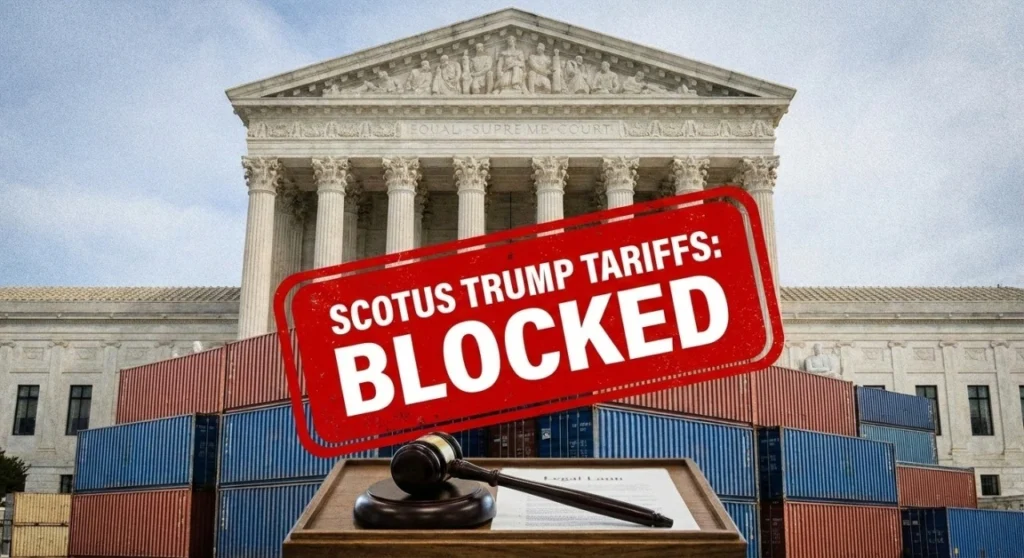
This historic SCOTUS Trump tariffs decision marks a major turning point for the American economy and executive power
The United States Supreme Court just issued a massive ruling on trade. This decision centers on the controversial SCOTUS Trump tariffs that recently sparked global debate. On February 20, 2026, the high court decided that the President lacks the power to tax imports alone. Specifically, the court looked at the use of the International Emergency Economic Powers Act (IEEPA).
For several months, legal experts waited for this specific outcome. Now, the ruling changes how every future president will manage international trade. In this news report, we will analyze the full decision. We will also look at the legal logic used by the justices. Furthermore, we will see how this affects your daily costs.
The Legal Background of the SCOTUS Trump Tariffs
President Trump had previously ordered a global 10-percent tariff on all imported goods. He claimed that these taxes were vital for national security. Additionally, he linked these trade measures to border control and drug safety. However, many business leaders strongly disagreed with this broad use of power.
These groups argued that the President was acting like a lawmaker. Consequently, they filed several lawsuits to stop the collection of these taxes. The case of Learning Resources, Inc. v. Trump became the main legal battle. Eventually, the case reached the highest court in the country.
The debate over SCOTUS Trump tariffs is about constitutional balance. For many years, Congress has given more control to the White House. But this ruling shows that the Supreme Court is pulling back. They want to ensure that only Congress can create new taxes.
- The 10-percent tariff applied to almost every foreign product.
- Trump used the 1977 IEEPA law to justify the move.
- Lower courts were unsure if the President had this right.
- The Supreme Court decided to provide a final answer.
Why the Court Blocked the SCOTUS Trump Tariffs
Chief Justice John Roberts wrote the primary opinion for the majority. He was joined by a mix of conservative and liberal justices. The court ruled that the IEEPA is not a “blank check” for the President. Instead, the law is for specific foreign policy emergencies only. It is not a tool for general economic policy.
The majority stated that Article I of the Constitution is clear. It gives the power to tax and regulate trade to Congress. Therefore, the President cannot use a “national emergency” to bypass the law. This is a huge win for those who support the separation of powers.
Moreover, the court used the “Major Questions Doctrine” here. This doctrine says that agencies need clear permission for big changes. Since the SCOTUS Trump tariffs were a massive shift, the court looked for proof. They found that Congress never gave the President this specific authority.
- The final vote was 6-3 against the administration.
- Roberts argued that the IEEPA has very strict boundaries.
- The decision protects the legislative role of the U.S. Congress.
- This ruling immediately halts several active executive orders.
Richard Epstein’s View on SCOTUS Trump Tariffs
Famous legal scholar Richard Epstein has shared his thoughts on this case. He believes the court made the right choice regarding SCOTUS Trump tariffs. Epstein argues that the IEEPA was never meant for trade wars. Rather, it was built for freezing assets of foreign enemies.
Epstein notes that the administration’s logic was far too wide. If trade is always an emergency, the President could control everything. This would essentially end the rule of law in America. Consequently, Epstein praises the court for restoring constitutional order.
Furthermore, Epstein explains that the SCOTUS Trump tariffs created market chaos. Businesses need to know the rules to grow and hire. When a president can change taxes in one day, investment stops. Therefore, the court’s decision brings much-needed stability back to the global market.
- Epstein believes executive power must have a clear finish line.
- He argues that the ruling stops “government by decree.”
- Economic growth requires predictable and steady tax laws.
- The scholar warns against using “security” to hide economic goals.
To understand the full scope of federal trade laws, you can visit the Official SCOTUS Blog for expert legal analysis.
Future Economic Impact of SCOTUS Trump Tariffs
The immediate effect of this ruling is very large. Thousands of American companies may now ask for their money back. These companies paid millions in tariffs over the last year. Furthermore, the White House must now find a new way to fund its projects.
Trump had hoped the SCOTUS Trump tariffs would replace the federal income tax. Now, he must ask Congress to pass a new law to do that. However, many lawmakers are hesitant to support such a big change. This creates a political stalemate in Washington D.C.
International partners have reacted with relief to the news. Many countries feared a long and painful trade war with America. This ruling reduces that threat almost instantly. Meanwhile, the American public is still processing what this means for prices.
- Retailers expect the price of electronics and cars to drop.
- The administration is looking for other legal loopholes.
- Foreign stock markets rose quickly after the announcement.
- Future presidents will have much less power over trade.
The Power of the Major Questions Doctrine
The Major Questions Doctrine was the key to this legal victory. The court uses this tool to keep the government in check. In the SCOTUS Trump tariffs case, it stopped the executive branch from overreaching. It forces the government to follow the exact words of the law.
Some people worry that this makes the government too slow. They say the President needs to act fast in a dangerous world. However, the majority believes that liberty is more important than speed. Consequently, the SCOTUS Trump tariffs ruling is a win for the Constitution.
How Prices Will Change Without Tariffs
The global economy felt the pain of these tariffs very quickly. Prices for everyday goods began to climb last year. Everything from washing machines to steel was more expensive. By removing the SCOTUS Trump tariffs, the court has helped stop inflation. This is a positive sign for the average worker.
However, some local factories might be unhappy with this news. They wanted the tariffs to protect them from foreign competition. Now, they must find new ways to be efficient. This will lead to more debates during the next election cycle. Trade remains a very hot topic for everyone.
Understanding the Dissenting Justices
It is helpful to look at why three justices disagreed. Justices Thomas, Alito, and Kavanaugh felt the President should have more power. They argued that the world is a dangerous place today. In their view, the President needs every tool possible to protect the country.
This 6-3 split shows a deep gap in how we read the law. One side wants a strong leader to handle modern crises. The other side wants to stick to the original plan of the founders. Nevertheless, the majority opinion is the law of the land now. The SCOTUS Trump tariffs are no longer in effect.
A Final Summary of the Case
The path to this Supreme Court ruling was very long. It began with a simple campaign promise about “America First.” It ended with a complex debate over the power of the President. The SCOTUS Trump tariffs case proves that the system of checks and balances works. Even the most powerful person must follow the Constitution.
As we look ahead, we must watch how Congress acts. Will they pass a law to give the President more power over trade? Or will they keep that power for themselves? The next few months will show us the future of the American economy.
In conclusion, the SCOTUS Trump tariffs decision is a landmark event. It protects the balance of power between the branches. It also provides a clear path for future trade discussions. While the political fight is not over, the legal rules are now clear.
Recommended Reading for Investors
To better understand how global shifts and legal rulings like the SCOTUS Trump tariffs affect your portfolio, we highly recommend Principles for Dealing with the Changing World Order by Ray Dalio. This book provides a roadmap for navigating the economic turbulence caused by major political and legal changes.